Lessons Learned
- Never share your backpacking itinerary with family or friends. Better to die unrescued than to endure their cruel mockery should you need to abort the trip early.
- Don’t live at sea level unless you don’t mind being a pathetic weakling.
I did a fair bit of backpacking in the High Sierras as a teenager, and it’s long been a hobby that I’ve wanted to get my family into.
3+ months of preparation.
In the early spring of 2024, I decided that the kids were finally big enough to carry most of their own adult-sized gear. With excessive enthusiasm, I spent the next several weeks building backpacking rigs for every person in the family, even as my wife made it pretty clear that she had no interest in crapping in the woods. We spent several nights in the backyard in the tent. We tried different backpacks and sleep systems, and I made several trips to REI to swap out gear based on our experiences. We did several multi-mile shakedown hikes with a full gear load—around 11 lbs for my wife and each kid, and probably 35+ lbs for me. The family, accustomed to long day hikes since the kids were little, did great.
The Reds Meadow area near Mammoth Lakes would have been an ideal starting point. The scenery is incredible, and the elevation (mostly between 7,000-9,000ft) would have been manageable for a family accustomed to sea level. Unfortunately, the Reds Meadow Road was closed for construction most days of the week, and backpacking permits were not available on the remaining days.
I opted instead for the Hilton Creek Lakes area a few miles away. This was perhaps my first backpacking trip as a young teenager, just a bit older than my kids were at the time. Hiking to Davis Lake would be 6 miles each way, with a few hundred feet of elevation gain in the first couple of miles. The 10,000-foot elevation wasn’t ideal, but I thought it would be manageable after some acclimatization.
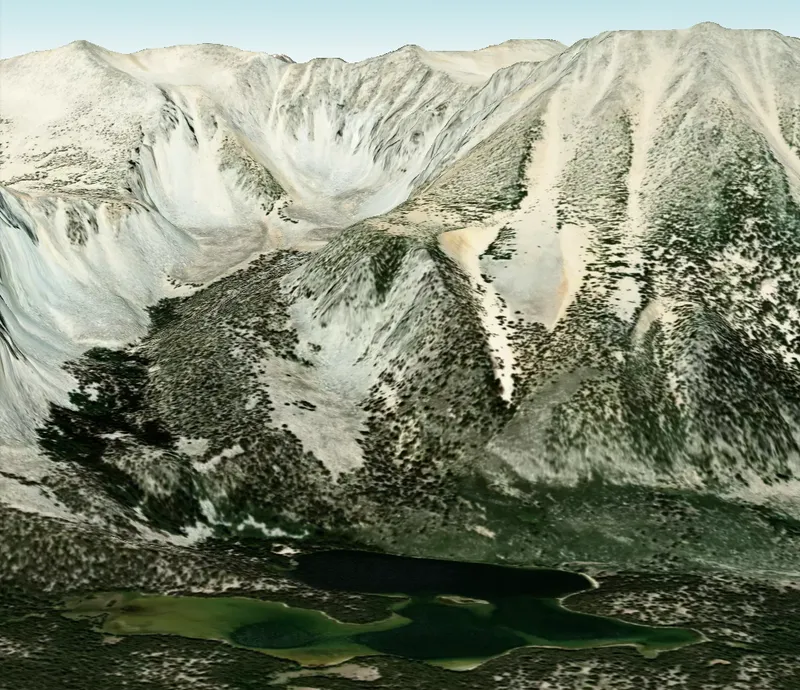

The misery begins…
We spent a couple of days prior to the trip day hiking the surrounding area, and by that point it should have been clear to me that this wasn’t going to work. The kids, ordinarily very enthusiastic about hiking, were clearly struggling with the elevation and the distance. As preteens, they were also less than thrilled about leaving their dogs and friends behind for a stupid backpacking trip with dad. My wife, who was reluctant to go in the first place, was clearly not enjoying the experience either.
However, having spent months preparing by that point, I dragged the family out to the trailhead on the third day. The kids’ packs, originally 11 lbs, had grown to around 13 lbs (about 15% of their body weights at the time) with the last-minute additions of pajamas and stuffed toys. We put on our packs and started the climb. After only about half a mile, it finally became clear that this wasn’t going to work. Everyone except me was miserable, though they were trying their best to suffer through for my sake. After less than half an hour we turned around and headed back to the car. I called the ranger station to cancel our permits, and we spent the next few days unhappily day hiking and squabbling before heading home.
In hindsight, I badly underestimated the difficulty of the trip. Hiking 6 miles at 10,000 feet elevation is quite different from doing it at sea level. I can now recall struggling on the same trip as a kid, even though I was fully acclimated (having grown up a few miles away from the trailhead) and probably a few years older than my kids were at the time. I now know to temper my expectations.
Was it worth it?
Looking back on the trip a bit over a year later, the kids have gained 15+ pounds of muscle and have expressed a renewed interest in backpacking, excited by the prospect of sleeping alone in a tent. Now that they have most of the necessary gear, I’ll be able to take them on fairly short notice with a lot less planning required.
Also, having the entire family equipped for backpacking has other unexpected benefits. Several of the gear items have proven useful during our frequent day trips. During the most recent Southern California wildfire season, there was a certain peace of mind in knowing that in a worst-case evacuation scenario, if we were forced to abandon our car (as several others were), we would still have warmth and shelter as we hiked to safety.